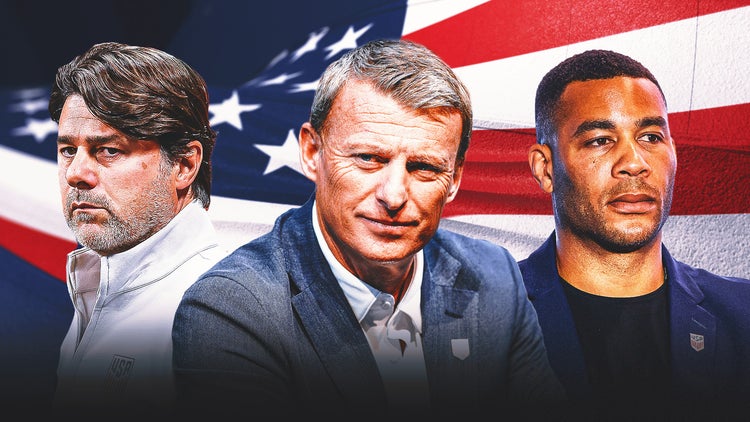
A key figurehead is leaving U.S. Soccer with the 2026 FIFA World Cup less than two months away. An unexpected twist for one of the tournament’s co-hosts with the biggest edition ever of soccer’s marquee event now on the horizon.
Earlier Tuesday, I reported that Matt Crocker will be exiting his role as sporting director to take over a similar role with Saudi Arabia. Why did this happen, and what’s next for all parties involved? Let’s answer the four biggest questions following Crocker’s decision.
1. What does a sporting director even do? And, is it a big deal that Crocker is leaving now?
For the first question, the short answer is to hire and fire the coach. The longer answer is more nuanced: Crocker oversaw all 27 of U.S. Soccer’s national teams, set the overall on-field direction of the federation, and played a significant role in the design of the federation’s brand new $200 million-plus training facility in Fayettesville, Ga., one of the best of its kind anywhere in the world.
For the second question: Yes, it’s a big deal. The U.S. men are less than two months away from their World Cup opener, one that will be played on home soil for the first time in 32 years. He’s joining a team the Americans could face in the knockout rounds of the tournament. There’s no getting around the fact that the optics here are terrible, for both the federation and Crocker alike.
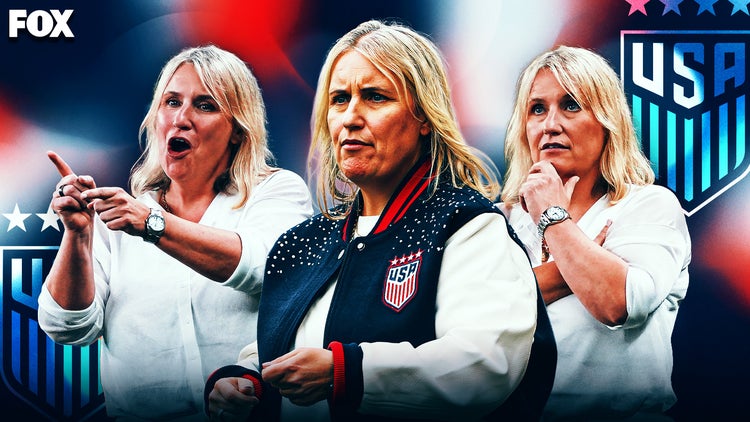
2. Crocker re-hired Gregg Berhalter for the men’s side in 2023 and brought in Emma Hayes for the women’s side in 2024. He then replaced Berhalter with Pochettino. How would you rate Crocker’s tenure?
(Photo by John Dorton/ISI Photos/USSF/Getty Images)
I was surprised that he rehired Berhalter, especially since Crocker had an existing relationship with current Canada boss Jesse Marsch, who at the time was turning down jobs in the Premier League. The disastrous 2024 Copa América proved that that was the wrong choice.
But landing two of the best coaches in the world in Hayes and Pochettino was a huge coup for the USSF, and it almost surely wouldn’t have happened without both knowing Crocker from their time working in England. It took Hayes just 10 games to deliver the U.S. women’s fifth Olympic gold medal and first in 12 years. Even if the U.S. men faceplant at the biggest World Cup of all time this summer, the scrutiny will fall on Pochettino and his players.
Whatever you think about the timing of Crocker’s departure, the Welshman is highly competent and hugely respected by soccer folks in his native Europe, which remains the center of the game’s universe. He did a good job. With the Saudis set to host the 2034 World Cup, nobody should be shocked that they apparently drove a dump truck full of money up to Crocker’s house to lure him away.
3. Speaking of Pochettino, how would this affect anything he is doing ahead of the summer’s World Cup? Or, afterward?
(Photo by Jared C. Tilton/Getty Images)
Absolutely. As I reported then, Onyewu was a candidate for the job in 2023 and is so highly thought-of inside the federation’s halls that they hired him as the assistant sporting director, a role that didn’t even exist at the time.
Gooch is whip-smart. He speaks four languages fluently. His playing career took him to the top leagues in Belgium, England, France, Italy, Portugal, Spain, the Netherlands and MLS, which means he’s incredibly well-connected.
And at 43, he’s already been an executive with clubs on either side of the Atlantic (Belgium’s Royal Excelsior Virton, Orlando City B of MLS Next Pro) and has spent the last three years working as Crocker’s right hand. Onyewu has paid his dues. He cares deeply about American soccer and the sport in the country at large. U.S. Soccer could do a lot worse.