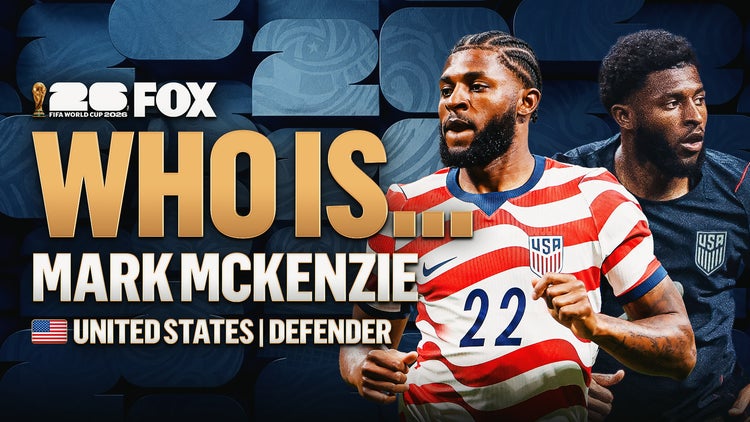
One of the final cuts from the United States roster for the 2022 FIFA World Cup in Qatar, Mark McKenzie has been a consistent call-up for current U.S. coach Mauricio Pochettino since the Argentine took over the sideline for the 2026 tournament co-hosts 19 months ago.
Four years later, McKenzie — who plays at French club Toulouse — is expected to make the USA’s 26-player World Cup roster. He could even be in Pochettino’s starting lineup in Los Angeles when the Stars and Stripes kick off Group D against Paraguay on June 12, which could instantly turn the central defender from Bear, Delaware into a household name for the millions of fans watching at home.
So who is Mark McKenzie? To find out, I sat down with the soft-spoken 27-year-old defender in March before the USA’s World Cup tune-ups against Belgium and Portugal.
(Photo by Andrew J. Clark/ISI Photos/USSF/Getty Images)
You were born in the Bronx and grew up in Delaware, but your father kept his job in Manhattan after you moved. How did he do it?
I was five when we moved. He worked at the Hospital for Special Surgery. It’s a four-hour drive away, but for a number of years he commuted to New York almost every day. He’d leave at four in the morning and get home at nine at night, sleep for a few hours and do it again. He’d stay at my grandmother’s house in the city if it was a long night, but he tried to get home as much as possible, especially as my sister and I were getting into different sports. He always wanted to be present.
Watching your dad do that, what message did that send?
At a young age you don’t understand it exactly. But as I got older, I started to realize that he was doing it for the betterment of the family and not necessarily because he loved driving on the turnpike.
He’s probably one of the biggest inspirations of my life. He’s an immigrant. He came from Jamaica with very little and earned everything he’s gotten. He instilled in me a lot of that same work ethic, that same understanding of what sacrifice looks like. I know things don’t happen overnight all the time, and that small progressions are very important. Ultimately, those pay dividends.
You mentioned different sports. What other sports did you play growing up?
Pretty much everything. Basketball. Flag football, because my mom wouldn’t let me play full contact. Swimming. A little bit of tennis. I even did tap dancing. My mom wanted a dancer — thankfully my sister fulfilled that for her. I’m just competitive. I had that from a young age, hated losing video games. I would cry if I lost playing Monopoly with the fam.
When did you have to focus on soccer exclusively?
Once I hit eighth grade, the Philadelphia Union academy was starting to come into the picture. But with school, I wasn’t able to make the commute back from Delaware every day. But once I got to high school, I made the decision to commit to soccer. Also, I didn’t feel like I was tall enough for basketball then. I grew a bit more in the years to come, but obviously it’s worked out pretty well.
Were you always a defender?
No, I was a midfielder until I was about 10 or 11, and then moved up to forward. Then I got to the Union’s pre-academy, and they saw that I didn’t have the same sense of arrogance sometimes that forwards have or the same selfishness to score. So they were like, maybe you should be a center back.
I’m guessing that was tough to hear.
Absolutely. You go from being the guy who’s getting goals and making plays to the guy trying to stop that happening. You’re facing attackers who want to embarrass you any moment they can. It was an adjustment. My dad was like, “You can throw a hissy fit if you want, but you’re getting an opportunity. If it’s at center back, be the best center back possible.”
Central defenders are so skilled with the ball nowadays. Did being an attacker as a teenager help?
Yes, and not just with my feet: Also in understanding how attackers move, their habits, the spaces they want to get to, the timing of their runs — stuff like that.
Are you a sports fan? Any soccer clubs that you follow?
As a kid, I would get up in the morning on the weekends and watch Premier League games. Arsenal’s been my favorite Premier League team since. I loved Thierry Henry and his style, so getting to meet him was really special.
When did you meet Thierry Henry?
When he was coaching Montreal in 2020, my last season with the Union. I also met him unofficially at a New York Red Bulls game back when I was 12. Got a chance to get a shirt signed by him. It was special.
What about NFL or NBA teams?
I’m a big LeBron James fan. I’ve always admired LeBron, the way he plays and carries himself. I liked the Miami Heat back when he was there with Dwyane Wade. In terms of American football, unfortunately, I’m a Giants fan. Beating Tom Brady in the Super Bowl twice is the one thing we can live on.
Your father loves soccer. Is that how you were introduced to it?
I remember kicking the ball around with my dad on the streets of New York before we moved. He was my first coach, with my local YMCA team. That’s really how I really started to love it.
Do you still have family in Jamaica? Have you been there?
When I was younger, before soccer started to pick up, we went back a few times during the summers. And over the last probably five to seven years, we’ve been able to go and spend time with my cousins. I also played against Jamaica in the Nations League game we won in Kingston at the end of 2024, one of Mauricio’s first games.
What’s your mom like?
She’s the rock of our family, somebody who I draw a lot of strength from. Her name is Lynette. She’s a Black woman who’s earned everything, like my dad has. She’s also a breast cancer survivor.
With my dad not around during the day, she’d go to work early, then after, take me to training or a youth clinic or camp while also managing my sister’s dance schedule. My parents are the reason I’m here today.
(Photo by Kevin Sabitus/USSF/Getty Images)