
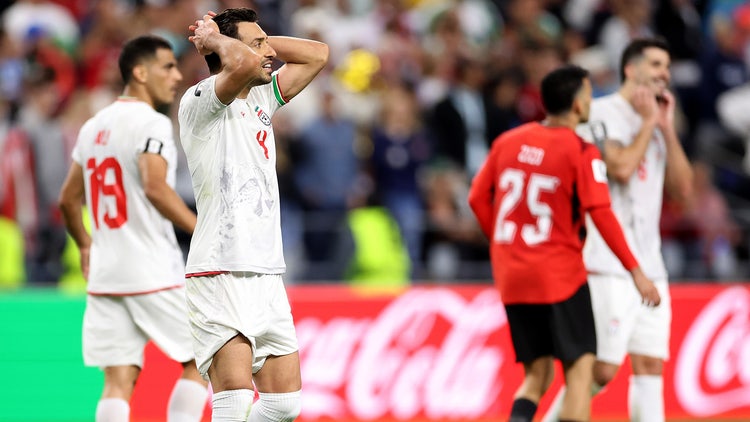
For a few moments, it looked like Iran had found the goal that would send it through.
In the 93rd minute of stoppage time against Egypt, Shoja Khalilzadeh struck the ball into an empty net after a wild sequence inside the box. Iran celebrated like it had just scored the late winner that would secure qualification to the knockout stage as the second-place team in Group G.
Then VAR stepped in.
The goal was ruled out for offside, and at first glance, it was easy to see why the decision looked confusing. Yasser Ibrahim was behind Khalilzadeh when the ball came to him, so the natural reaction was to think he had kept him onside.
But Ibrahim was not the second-last Egyptian player; he was the last one.
That is where the position of Egypt goalkeeper Mostafa Shobeir mattered. Shobeir had come out and was ahead of Khalilzadeh on the play, which changed the offside line. Usually, the goalkeeper is one of the two opponents closest to the goal, so it can be perceived to think of offside as being the “last defender.”
But the rule is not based on the last defender; it is based on the second-last opponent.
Because Shobeir was further up the field, Ibrahim being behind Khalilzadeh was not enough to keep him onside. Ibrahim was only the final Egyptian player back. The second-last Egyptian player was Hamza Abdelkarim, and Khalilzadeh was ahead of him when the ball came his way.
That put Khalilzadeh in an offside position.
So even though there was an Egyptian defender behind him, Iran’s goal could not stand. Khalilzadeh needed to be level with or behind the second-last opponent, not just one Egyptian player near the goal line.
It was a devastating moment for Iran. A 93rd-minute winner would have sent it into the knockout stage automatically. Instead, the match stayed 1-1, Egypt held on to second place, and Iran was left waiting on other results to see if it would advance as one of the best third-place teams.