
SEATTLE STADIUM — It’s the end of the world for the U.S. men’s national team.
The USA was the final 2026 FIFA World Cup co-host still standing after Canada and Mexico were eliminated over the weekend. On Monday, the Americans joined them, losing 4-1 to Belgium in front of another raucous home crowd with a spot in Friday’s quarterfinal against Spain on the line.
Despite the controversial return of striker Folarin Balogun to coach Mauricio Pochettino’s starting lineup — Balogun, who was originally suspended for Monday’s contest because of the red card he received in last week’s 2-0 victory in the round of 32 over Bosnia and Herzegovina, was allowed to play by FIFA’s disciplinary committee following pressure from U.S. Soccer and government officials — the U.S. couldn’t top an opponent global soccer’s governing body ranks No. 9 to the Stars and Stripes’ No. 16.
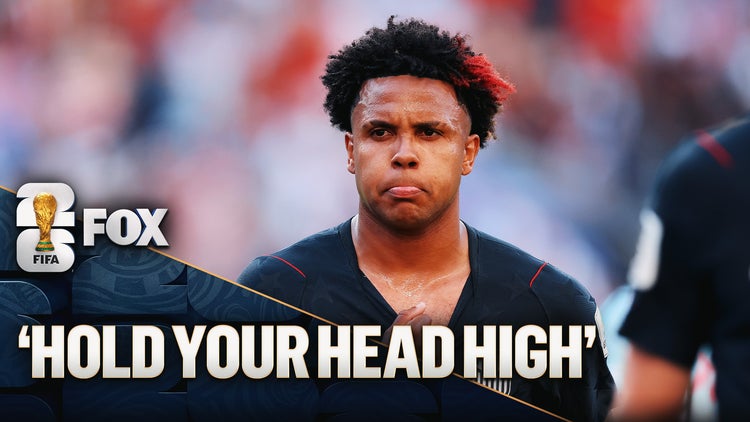
It only took Charles De Ketelaere eight minutes to put Belgium ahead. And while USA playmaker Malik Tillman pulled the hosts level with his second free-kick goal in as many knockout games, the Belgian forward killed whatever momentum Tillman’s strike had generated by notching his second — the eventual game-winner — moments later to restore the Red Devils’ lead. They wouldn’t relinquish it again, with Hans Vanaken adding the backbreaking third in the second half following a mistake from Stars and Stripes keeper Matt Freese. Romelu Lukaku added insult to injury with Belgium’s fourth in stoppage time.
Monday’s defeat marks the fourth time the U.S. has been eliminated in the round of 16 since 2010. The Americans’ only win at that stage came against regional rival Mexico in 2002.
Here are my four takeaways from the USA’s World Cup elimination loss:
(Photo by Robbie Jay Barratt – AMA/Getty Images)
As impressive as the Belgians were in coming back to beat Senegal in the round of 32, despite trailing 2-0 late, the Red Devils hadn’t been overly convincing at this World Cup. In group play, they couldn’t beat Egypt. They couldn’t beat Iran. Rumors of infighting persisted even after Rudi Garcia’s team had advanced to the last 16.
Perhaps it was FIFA’s decision to overturn Balogun’s ban, but Belgium appeared as cohesive as could be from the first whistle on Monday. It’s not as if either of De Ketelaere goals came against the run of play; Garcia’s side outshot the U.S., 11-2, in the first half and enjoyed 53% of possession, even though the Americans trailed for all but 10 of the opening 45 minutes.
When the U.S. did have the ball, it didn’t do much with it. Pochettino’s squad had looked so sharp and assertive all tournament; suddenly it appeared sloppy and tentative in its biggest game. Even Tillman’s free kick lacked precision; only a fortunate deflection off the Belgian wall allowed the effort to beat veteran backstop Thibaut Courtois.
The second half wasn’t much better for the U.S. And when Belgium went up by two, the mountain was simply too tall to climb.
(Photo by Carl Recine/Getty Images)
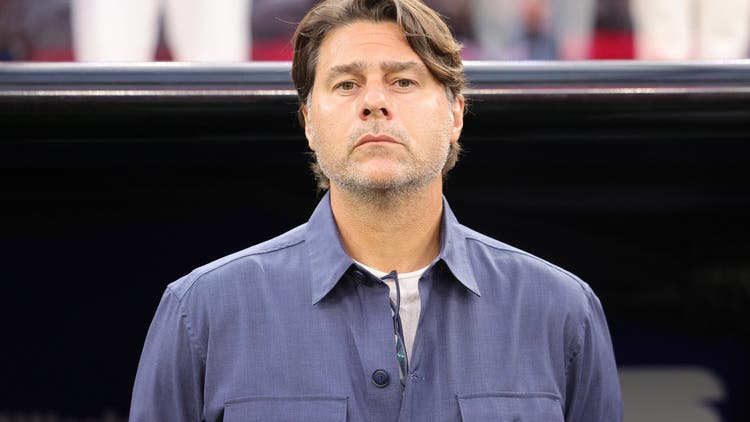
On Sunday, Pochettino sought to insulate himself from criticism in the event of a loss, saying that he is but “a small part” and that his “players are responsible” for the outcome. But the buck stops with USA’s high-profile 54-year-old coach, who simply couldn’t coax a good performance out of his team against the only elite opponent it faced at this World Cup.
Lured as a mercenary with a salary several multiples higher than any previous men’s or women’s boss, the Argentine was supposed to be the man capable of taking perhaps the most talented collection of Americans ever to new heights. Instead, it turned out to be more of the same.
While he set a new U.S. record with three World Cup wins, Pochettino was only able to equal what every one of his predecessors this century also achieved: reaching the round of 16. Gregg Berhalter did it four years ago in Qatar. Jürgen Klinsmann’s 2014 squad took Belgium to extra time. Bob Bradley did the same in 2010 after winning a group that included England. And none of them had the advantage of playing at home.
Monday’s loss ensures that Americans’ best showing since the inaugural World Cup in 1930 — Bruce Arena took the Americans all the way to the quarterfinals in 2002 — will remain so for at least another four years.
All that talk about reaching the semis this summer, about leaving a legacy, about potentially even winning the World Cup — “Why Not Us?” Pochettino asked at every opportunity — was just that: talk.
Top-level sports are a results business. You are what your record says you are. After winning his first two games and a round of 32 match at this World Cup, the former Paris Saint-Germain manager, in the end lost the game that mattered the most.
(Robert Gauthier / Los Angeles Times via Getty Images)