

The world’s best have thrived this summer at the 2026 FIFA World Cup, which has helped make this the best edition of the tournament ever.
Ahead of the final between Spain and Argentina, we ranked the 50 best players in the tournament. Most of the players toward the top of this list have household names and are among the world’s best. Others, though, have broken out and became stars during the tournament.
We’ll start our list with a player who fits that bill and is poised to be a star for Mexico moving forward.
50.
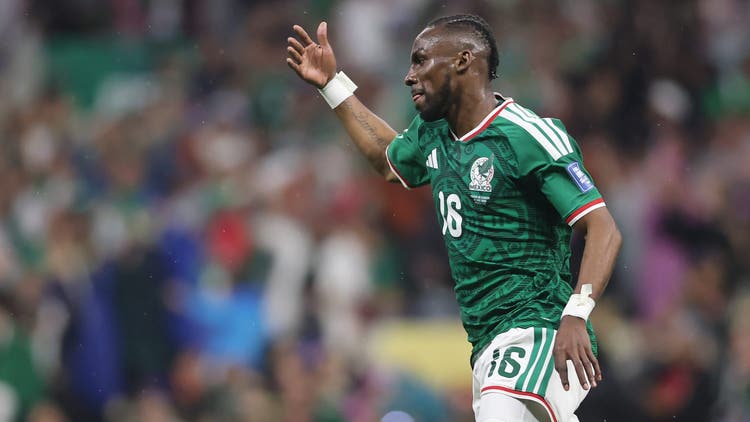
Gilberto Mora is the future of El Tri. (Ulrik Pedersen/NurPhoto via Getty Images)
The 17-year-old Mexican talent entered the World Cup with an opportunity to establish himself as one of the brightest young players in international football.
Mora had already broken into Tijuana’s first team, making 20 Liga MX appearances and scoring six goals during the season, while his performances attracted interest from several major European clubs.
Mexico carefully managed Mora during the early stages of the tournament, introducing him from the bench in the opening match against South Africa. He was then handed his first start in the final group-stage match against Czechia before retaining his place for the knockout games against Ecuador and England.
Mora displayed remarkable composure, technical quality and creativity for a player of his age. He finished the tournament with four appearances and three starts, becoming the youngest Mexican to play at a World Cup and the second-youngest player ever to start a World Cup knockout match.
Mora’s performances confirmed his enormous potential and further increased the interest surrounding his future.
49.
Vitinha entered the World Cup following another exceptional season with Paris Saint-Germain, continuing to demonstrate why he is regarded as one of the best midfielders in the world. His composure in tight spaces, press resistance and ability to dictate the tempo were instrumental as PSG won a second consecutive Champions League title, with Vitinha earning Player of the Match honors in the final.
Vitinha produced a solid individual World Cup despite Portugal’s elimination by Spain in the round of 16. Playing alongside PSG teammate João Neves, he helped Portugal control matches from midfield and completed 96% of his passes throughout the tournament.
Vitinha did his part for Portugal, despite the team’s round of 16 loss to Spain. (Photo by Juan Luis Diaz/Quality Sport Images/Getty Images)
42.
Neves entered the World Cup following another impressive season with Paris Saint-Germain. Playing alongside Vitinha and Fabián Ruiz, he remained an integral part of PSG’s midfield as the club won a second consecutive Champions League title. His relentless energy, technical quality and ability to contribute at both ends of the pitch made him a key figure in one of Europe’s strongest teams.
Neves continued in that all-action midfield role for Portugal alongside Vitinha and Bruno Fernandes. He scored the opening goal and was named Player of the Match in Portugal’s 1-1 draw against DR Congo, providing an immediate impact in their first game of the tournament. The 21-year-old remained an important figure as Portugal reached the round of 16 before suffering a narrow 1-0 defeat to eventual finalists Spain.
41.
Pickford entered the World Cup following another dependable season with Everton, playing every minute of their 38 Premier League matches and keeping 11 clean sheets. His position as England’s first-choice goalkeeper had long been secure as he prepared to compete at his third World Cup and fifth major international tournament.
Pickford produced arguably his best major tournament for England, repeatedly making important saves in crucial moments. Even during the 2-1 semifinal defeat to Argentina, he came to England’s rescue several times after they took the lead, keeping Argentina at bay before the pressure eventually became too much.
Although England fell narrowly short of the final, Pickford was one of their most consistent and reliable performers throughout the tournament.
40.
Alvarado entered the World Cup following another productive season with Chivas, making 35 appearances across all competitions while recording four goals and five assists. He remained one of the club’s primary creative outlets, using his movement, technical quality and left-footed delivery to consistently create opportunities from wide areas.
Alvarado carried those qualities onto the international stage, repeatedly cutting inside onto his left foot and delivering dangerous crosses into the penalty area.
He registered three assists during Mexico’s run to the round of 16, including the delivery of Raúl Jiménez’s first career World Cup goal in the opening victory over South Africa. Alvarado’s tournament total made him Mexico’s all-time leading assist provider at the World Cup.
39.
Salah entered his second World Cup following the most difficult season of his Liverpool career. The defending Premier League champions fell to fifth, while Salah lost his guaranteed place in the starting lineup amid a public breakdown in his relationship with Arne Slot, who was later dismissed. Despite those struggles, Salah finished his final Liverpool campaign with 12 goals and 10 assists in 41 appearances.
Salah rediscovered his spark with Egypt and led the nation on a historic run. He scored the go-ahead goal and assisted Mahmoud Trezeguet as Egypt came from behind to defeat New Zealand 3-1, securing the first World Cup victory in the country’s history. He then helped the Pharaohs overcome Australia on penalties to record their first knockout-stage win before their tournament ended in heartbreaking fashion with a 3-2 defeat to Argentina after surrendering a two-goal lead.
After failing to qualify for the 2022 World Cup and exiting at the group stage in 2018, Salah finally delivered the landmark tournament run that had previously eluded him with Egypt. His performances further cemented his place as one of the greatest African footballers of all time.
38.
Along with Enzo Fernández, Mac Allister has been a mainstay in Argentina’s midfield since before the World Cup triumph back in 2022. Then, he was at Brighton. He has since moved to Liverpool, where he has established himself as one of the best midfielders in the world.
Mac Allister is an all-action player who covers every blade of grass on the pitch. He didn’t start Argentina’s meaningless group-stage match against Jordan (only playing 29 minutes), but he has otherwise played every single second of the tournament for the reigning champions.
While Fernández brings more tenacity, Mac Allister is more technical and thrives on the ball. Another World Cup win would put him in rarefied air.
37.
Manzambi entered the World Cup following a breakout season with Freiburg, recording seven goals and nine assists across 47 appearances. The versatile 20-year-old helped Freiburg reach the first European final in the club’s history, where they suffered a 3-0 defeat to Aston Villa in the Europa League Final. His energy, ball-carrying and ability to operate in several attacking roles made him one of the most exciting young players in Switzerland’s squad.
Manzambi began the tournament as a substitute but changed the trajectory of his World Cup with a brilliant late brace in Switzerland’s 4-1 victory over Bosnia and Herzegovina. That performance earned him his first start against Canada, where he recorded a goal and an assist in a 2-1 win.
Manzambi retained his place for the round of 32 victory over Algeria, producing excellent ability to go at the Algerian defender before setting up Breel Embolo for the opening goal.
Manzambi finished the tournament with three goals and two assists before suffering a knee injury in training that ruled him out of Switzerland’s victories over Colombia and their heartbreaking extra-time quarterfinal defeat to Argentina. Despite his campaign ending prematurely, he emerged as one of the breakout players of the World Cup.
36.
Gill plays his club football for San Lorenzo in Argentina’s Primera División and has become an important part of Gustavo Alfaro’s Paraguay side. In a team that defends deep, invites pressure and often operates in a low block, Gill’s concentration, shot-stopping and reliability provide a reliable last line of defense.
Gill endured a difficult start to the World Cup as Paraguay suffered a 4-1 defeat to the United States, but he responded with consecutive clean sheets in a 1-0 victory over Türkiye and a goalless draw against Australia. He made six saves against Türkiye and another five against Australia, helping Paraguay collect the four points required to advance as one of the best third-place teams.
Gill then produced his defining performance in the round of 32 against Germany. He made five saves across 120 minutes before stopping two penalties in the shootout, helping Paraguay advance 4-3 on penalties following a 1-1 draw.
35.
Díaz entered the World Cup following arguably the finest club season of his career during his debut campaign with Bayern Munich. The Colombian recorded 15 goals and 14 assists in the Bundesliga, forming one of world football’s most dangerous attacking trios alongside Harry Kane and Michael Olise. He finished with 26 goals and 19 assists across all competitions as Bayern won both the Bundesliga and German Cup while reaching the Champions League semifinals.
Díaz arrived as Colombia’s leading attacking threat as the nation attempted to build on its run to the 2024 Copa América final. He recorded one goal and one assist at the World Cup, producing both during Colombia’s 3-1 group-stage victory over Uzbekistan.
Although Díaz remained dangerous with his direct running and ability to beat defenders, he did not influence the tournament as consistently as he would have hoped. Colombia frequently failed to turn its promising attacking play into goals before being held scoreless by Switzerland and eliminated on penalties in the round of 16.
34.
Modrić turned back the clock during his first season with AC Milan. Even at 40 years old, the Croatian remained one of the club’s most influential players, with his composure, passing range and ability to control matches translating smoothly to Serie A. Although Milan endured a disappointing campaign, Modrić continued to demonstrate that he could perform at the highest level.
His World Cup began poorly as Croatia lost 4-2 to England, with Modrić conceding the penalty that led to the opening goal. However, he grew into the tournament and produced his best performance against Ghana, becoming the oldest player in World Cup history to register an assist as Croatia secured its place in the knockout stages.
Modrić also performed well against Portugal in the round of 32, but Gonçalo Ramos’ stoppage-time winner eliminated Croatia in a 2-1 defeat. It was likely the final World Cup appearance of his legendary career, which included captaining Croatia to a runner-up finish in 2018 and third place in 2022.
Regardless of what comes next, Modrić will be remembered as one of the greatest midfielders in World Cup history.
Luka Modrić’s last World Cup game came in the round of 32 against Portugal and former Real Madrid teammate Cristiano Ronaldo. (Thiago Szwarc/ISI Photos/ISI Photos via Getty Images)
25.
The Crystal Palace winger entered the tournament following the best club season of his career, scoring 21 goals and providing two assists across all competitions. He played a central role in Palace’s Conference League triumph, finishing as the competition’s leading scorer with nine goals and being named its Player of the Season.
Sarr carried that form into the World Cup, emerging as Senegal’s main attacking threat. He scored four goals in four appearances and also registered an assist. Although he was slightly wasteful in Senegal’s opening match against France, he grew into the tournament and consistently looked lively and dangerous whenever he received the ball.
24.
Balogun entered the World Cup following an impressive season with Monaco. He scored 13 Ligue 1 goals and finished the campaign with 19 goals and three assists across all competitions, earning the opportunity to showcase his talent on the biggest stage while representing one of the tournament’s co-hosts.
Balogun announced himself as one of the United States’ leading performers, scoring three goals during its run to the round of 16. He was initially shown a red card against Bosnia and Herzegovina, although FIFA later suspended the resulting ban and allowed him to face Belgium. Despite the United States’ heavy defeat in that match, Balogun’s overall tournament strengthened his reputation and demonstrated his ability to perform at the highest level.
23.
Vozinha became a star at the World Cup, first with a stellar performance in a 0-0 draw with Spain and then more amazing saves throughout Cape Verde’s run. Against Argentina, the keeper was stellar, keeping out some of the world’s best players, including Lionel Messi himself.
The Cape Verde goalkeeper had about 50,000 followers on Instagram before the tournament started. As of Thursday, July 16, he has 29 million.
Now, the 40-year-old is without a club ahead of the new season, which will begin in August. Whoever signs the veteran will get a reliable shot-stopper and a new celebrity within the soccer world.
22.
Saka entered this tournament lacking match fitness after suffering an injury in March and still playing 49 games for Arsenal this past season. He helped lead the Gunners to a Premier League crown and appearance in the Champions League Final.
Saka appeared in England’s first six games but did not play against Argentina with England protecting a lead late.
Saka managed just 268 minutes for England at the tournament, but he showed why he’s one of the best right-wingers in the world. He registered three assists and was constantly wreaking havoc down the Three Lions’ right wing.
21.
Akanji made 33 Serie A appearances after joining Inter Milan on loan, helping the club win the Scudetto. Inter’s title victory and Akanji’s number of appearances met the reported conditions required to trigger the obligation to make his move from Manchester City permanent.
His club success carried over to the international stage, where he anchored the defense of a Switzerland side that produced its deepest World Cup run in 72 years. The Swiss reached the quarterfinals for the first time since hosting the tournament in 1954, with Akanji playing a pivotal role at the heart of their defense.
Manuel Akanji helped carry Switzerland through a deep World Cup run.(Photo by Tom Weller/picture alliance via Getty Images)
19.
Hakimi entered the tournament after playing an important role for a Paris Saint-Germain side that won back-to-back Champions League titles. Widely regarded as one of the best right-backs in the world, he arrived determined to lead Morocco on another deep run after the nation reached the semifinals in 2022.
Morocco did not quite return to the semifinals, but it was still another successful tournament as the Atlas Lions reached the quarterfinals. Hakimi provided a constant attacking threat with his overlapping runs, movement into central areas and ability to stretch opposing defenses. He finished the tournament with one goal and two assists.
18.
Porro was a key player for Tottenham in the Premier League last season and proved to be one of the bright spots during what was a forgettable campaign. With La Roja, Dani Carvajal’s regression opened up a space for him on the right side of defense.
Porro has made right back his spot for Spain, playing alongside a talented defense that has been the best at the World Cup this summer. It will once again be tested in the final against Argentina.
Porro’s biggest highlight was his goal in the semifinal win over France. It was a good example of what makes him so good for Spain, putting his ability going forward and hustle on full display.
17.
Upamecano entered the World Cup following an excellent season with Bayern Munich, playing a key role as the club won the Bundesliga and reached the Champions League semifinals. Vincent Kompany’s aggressive, high defensive line placed significant responsibility on Upamecano, whose recovery speed, strength and ability to defend large spaces were crucial to Bayern’s system.
The center back carried that form into the World Cup and rarely put a foot wrong during France’s run to the semifinals. His physicality, recovery defending and composure helped Les Bleus concede only two goals across their first six matches. France ultimately fell 2-0 to Spain, but Upamecano was one of their most consistent performers throughout the tournament.
16.
Fernández entered the World Cup following another productive season with Chelsea. After playing a key role in the club’s 2025 Club World Cup triumph, he remained one of its brightest performers during a difficult campaign, recording 15 goals and seven assists across 54 appearances.
Fernández has provided a threat with his forward runs, ball-carrying and ability to arrive inside the penalty area. He has performed in a deeper role for Argentina, using his passing range, composure and defensive awareness to help control matches from midfield.
Fernández has remained an integral part of the defending champions’ run to another World Cup final and delivered one of their biggest moments of the tournament, scoring a powerful late equalizer against England before Lautaro Martínez headed home the stoppage-time winner in a dramatic 2-1 semifinal victory.
15.
Cubarsí emerged from Barcelona’s La Masia academy and broke into the first team as a teenager under Xavi Hernández. He later established himself as a key figure under Hansi Flick, providing Barcelona with a major defensive boost during a period in which the club’s financial difficulties limited its ability to strengthen the squad. Cubarsí has since helped Barcelona win back-to-back La Liga titles while establishing himself as one of the brightest young center backs in world football.
Although Cubarsí was included in Spain’s preliminary squad for Euro 2024, he was one of three players omitted from the final 26-man roster. Two years later, the 19-year-old has become an integral part of Luis de la Fuente’s defense alongside Aymeric Laporte.
Cubarsí has started throughout Spain’s run to the World Cup final, displaying remarkable composure, intelligence and quality in possession. He has played a pivotal role in a defense that has recorded six clean sheets in seven matches and conceded only one goal across the entire tournament.
14.
Pedri entered the World Cup after helping Barcelona win back-to-back La Liga titles, further demonstrating why he is considered one of the most technically gifted midfielders in world football. His close control, awareness, passing range and ability to dictate the tempo continued to make him an important player for both club and country.
The 23-year-old began the tournament in Spain’s starting lineup, but Luis de la Fuente made a tactical adjustment for the quarterfinal against Belgium, selecting Fabián Ruiz alongside Rodri and Dani Olmo. After Spain secured a 2-1 victory, De la Fuente retained the same midfield for the 2-0 semifinal win over France.
Despite losing his starting position during the latter stages, Pedri has still performed well when called upon. His place on the bench should not overshadow his overall quality or future importance to Spain, with the midfielder still having the best years of his career ahead of him.
13.
Yamal entered the World Cup following another exceptional season with Barcelona, helping the club win back-to-back La Liga titles while establishing himself as one of its most important attacking players. His extraordinary left foot, creativity and ability to beat defenders have already made him one of football’s brightest stars, but a hamstring injury suffered late in the club season forced Spain to ease him into the tournament.
Yamal made a 25-minute cameo during Spain’s opening draw against Cabo Verde before gradually receiving more playing time as his fitness improved. He scored his first World Cup goal in the 4-0 victory over Saudi Arabia and has continued to show flashes of his individual brilliance throughout Spain’s run.
Although he has not consistently reached the remarkable standards he has already set for himself, Yamal has grown into the competition and remains capable of producing a decisive moment as Spain prepares for the World Cup final.
Lamine Yamal will be in the World Cup Final thanks to Spain’s win over France. (Grzegorz Wajda/SOPA Images/LightRocket via Getty Images)