
On soccer’s biggest stage, the FIFA World Cup showcases the world’s elite soccer talent as 48 countries compete for the sport’s highest honor. As countries draw players across various clubs and leagues, the process for World Cup rosters becomes complex.
Which raises various questions: How are these teams chosen, how many players can a roster hold, are there any restrictions to a roster, and when do teams need to have a finalized list ahead of the tournament’s start?
There is not only a maximum number of players on a World Cup roster, but also a minimum: a team must have at least 23 players on the roster, and no more than 26. While there were initial discussions about expanding the roster size further for the 2026 tournament again – FIFA had expanded it for the 2022 World Cup – the decision was made to keep things at 26 players maximum for this year’s edition of the tourney.
There are two separate deadlines for roster submission. An expanded list of possible players – from 35 to 55 – must be submitted to FIFA by May 11, 2026; this provisional list is not shared by FIFA, and remains for internal use. A second, smaller list with the final roster must be submitted by May 30; should a player be injured before their World Cup match, they can be replaced up to 24 hours beforehand by another player from the larger provisional roster, but otherwise the submitted roster is the one that each team will play in the 2026 World Cup with. Any player not included on the provisional release list who is added to the final roster must be approved by FIFA.
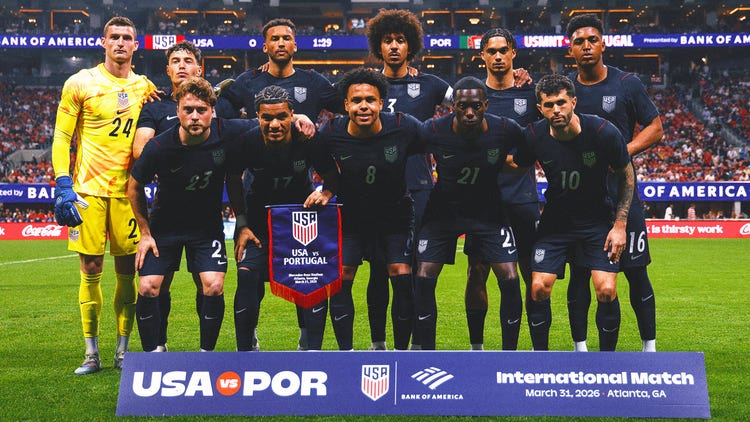
(Photo by John Dorton/ISI Photos/USSF/Getty Images)
Beyond limiting the rosters to between 23 and 26 players and the rules around injury replacements, there are three other components to roster construction that a team must adhere to.
First, teams are able to designate up to nine players as being in training, which gives them chances to participate in practices and alongside the main roster, but they are not allowed to participate in the World Cup and will not be part of the roster once the tournament begins.
Second, of the 23-to-26 players, three must be goalkeepers – for the provisional list, four of the players must be goalkeepers. There are no other position-based roster restrictions, but three keepers are required on the final roster.
Finally, all players must hold the nationality of the country they are representing in the World Cup, or, as FIFA puts it, “All players shall hold the nationality of their country or territory as represented by the Participating Member Association and be subject to its jurisdiction.”
(Photo by John Dorton/ISI Photos/USSF/Getty Images)