
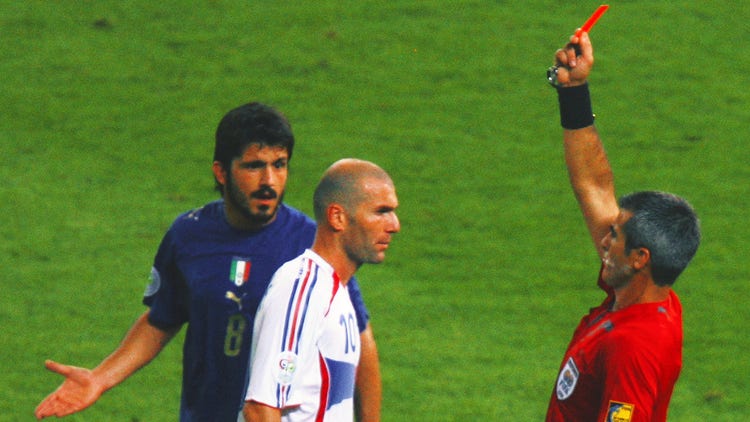
It’s a scene we’ve seen played throughout the history of the World Cup time and time again.
A hard foul by a player that sends his opponent writhing in pain onto the pitch. The referee races over, whistling frantically while players from both sides gather around to push and plead.
Sometimes the official gives just a stern verbal warning to the player involved. But sometimes that official pulls out either a yellow or red card, altering the course of a game. But what do these cards signify? And changes are in store for the World Cup? Let’s dive in.
Photo by Marc Atkins/Getty Images)
A yellow card is a disciplinary measure used by the referee to caution (book) a player for a foul or offense. Yellow cards can be shown to anyone involved in the match – players, substitutes, personnel on the bench, coaches and other team officials. Think of this card as a caution sign, warning the player of their infraction. The referee shows the card, but the player stays in the game. Among the most common yellow-card offenses include:
– a reckless challenge on an opponent such as tripping, tackling, grabbing, or interfering during play;
– time-wasting or interfering with an opponent’s attack;
– denying the other team an obvious goal-scoring opportunity (also known as ‘DOGSO’);
– exaggerating being foul or diving after physical contact by an opponent;
– taunting or excessive celebration, including removing their shirt after scoring a goal;
(Photo by ANNE-CHRISTINE POUJOULAT/AFP via Getty Images)