
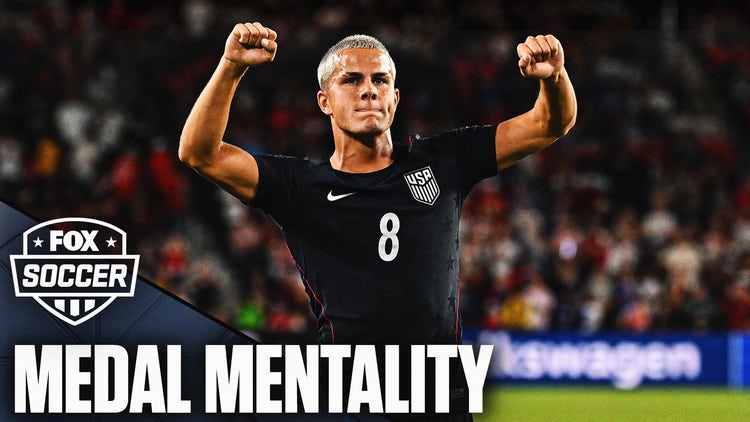
When a new generation of blue-chip teenagers recently led the U.S. men’s soccer team to four convincing wins in its first four games since capturing the imagination of the American public during the 2026 FIFA World Cup, optimism about the program’s future surged among USA fans old and new.
Perhaps nobody was happier about how Cavan Sullivan, Julian Hall and the rest of the youngsters fared than U.S. Soccer COO Dan Helfrich.
(Photo by Isaiah Vazquez/USSF/Getty Images)
In less than a year in the role, the former Deloitte executive has quietly emerged as one of the most influential figures in the domestic game. Helfrich, who has overseen the federation’s day-to-day operations since January, and CEO JT Batson made the decision to sign coach Mauricio Pochettino to a new four-year contract following the Stars and Stripes’ stirring run to the World Cup round of 16.
And it was Helfrich who spearheaded the successful recruitment of three-time former U.S. World Cup defender Steve Cherundolo, an MLS Cup-winning coach with LAFC in 2022, to lead the American men at the 2028 Olympics in Los Angeles.
(Photo by Rich Lam/Getty Images)
The Olympics are an entirely different matter. It’s primarily an under-23 event, for starters, with three overage players per team permitted. Mid-major national teams around the same caliber as the U.S. have won it on multiple occasions in the past, most notably chief rival Mexico in London in 2012.
LA28 will feature a 12-nation men’s tournament. If the hosts advance from group play, they’d be just one knockout-stage win from the medal round. Imagine what 90,000 red, white and blue-clad fans packed into the historic Rose Bowl to watch both the men and women go for glory on the last weekend of July 2028 could do to further propel soccer in America.
Helfrich definitely has.
“This summer was the biggest and broadest demonstration of what large-scale public love of the sport can look like in our country, and we think for several weeks in the summer of 2028, we can recapture some of that same passion and fervor and joy,” said Helfrich, a soccer lifer who played at Georgetown and has a son currently on the top-ranked Hoyas and a daughter who represented the U.S. U-17s before enrolling at the University of Virginia.
“When you piece together a ‘26 World Cup, a ’28 Olympics, and hopefully a 2031 Women’s World Cup on home soil, there’s enough connective tissue between all of those events that we believe we can create stars.”
Sullivan and Hall are the leading candidates on the men’s side. The 18-year-old Hall scored in his first three senior international games this fall, including the winner in a resounding 3-0 exhibition victory over Mexico. Sullivan, who turned 17 last month, became the youngest goalscorer in program history later in that game.
(Photo by Patrick Mulligan/USSF/Getty Images)
For Cherundolo, the difficult part will be convincing European clubs to release players for the Olympics. Unlike for major senior tournaments like World Cups or Copa América, FIFA does not compel clubs to allow youth national teamers to report for Olympic duty.
Still, MLS teams historically haven’t stood in the way of their youngsters. Given the spotlight a home Olympics will shine on its athletes — and the potential to cash in on any transfer interest that comes as a result — that doesn’t figure to change.
Fielding the strongest Olympic squad possible could also pay off for Pochettino at the 2030 World Cup.
During a roundtable with reporters at U.S. Soccers headquarters outside Atlanta three days before Spain beat Argentina in the 2026 final, Helfrich noted that 12 members of La Roja’s squad were former Olympians. La Albiceleste boasted eight. Semifinalists France had six.
“The historic connection between strong Olympic performances and then strong World Cup performances that followed either two or six years later is well known,” said Helfrich, noting that that history includes the U.S.
(Photo by Gary M. Prior/Getty Images)